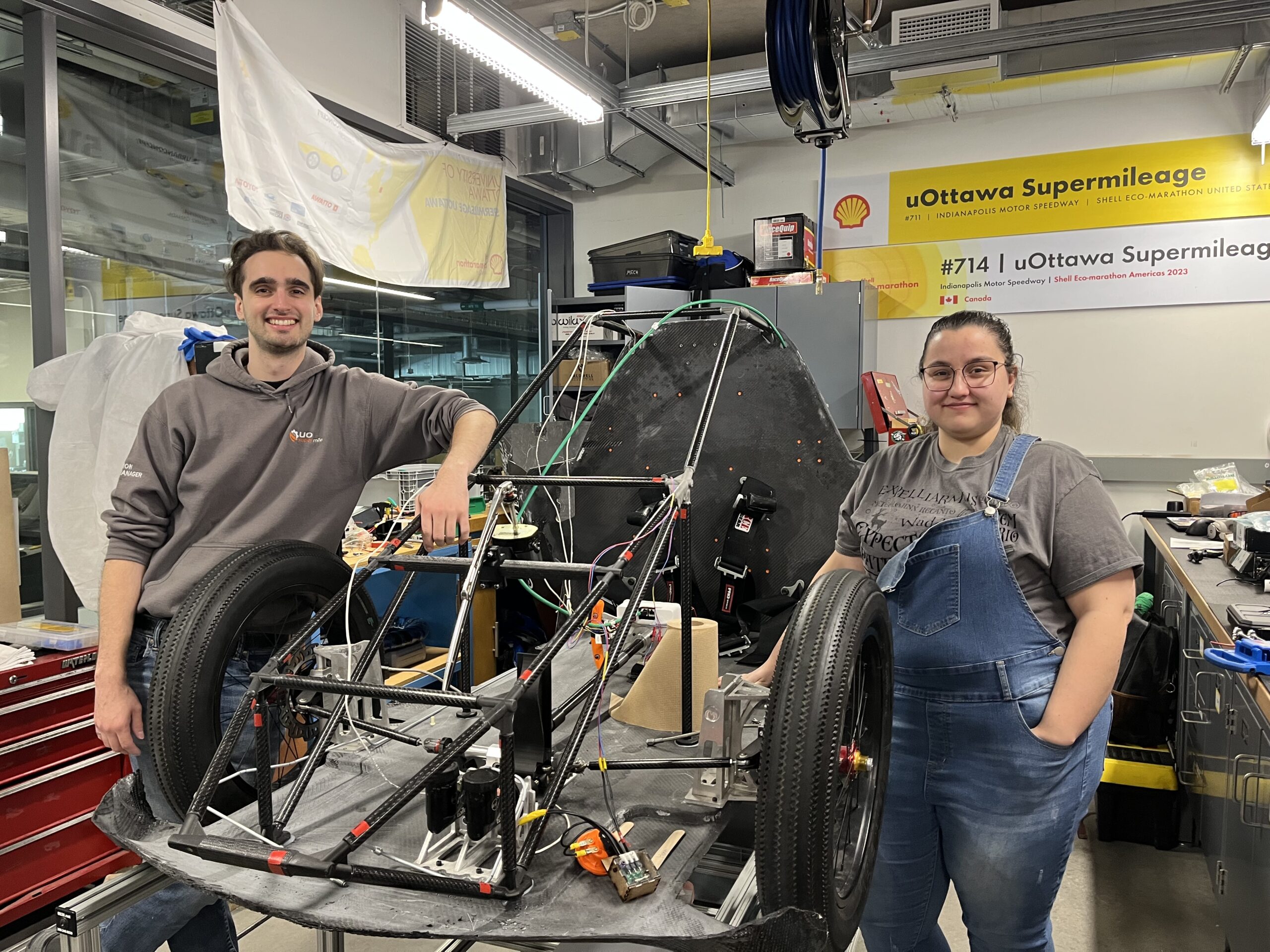
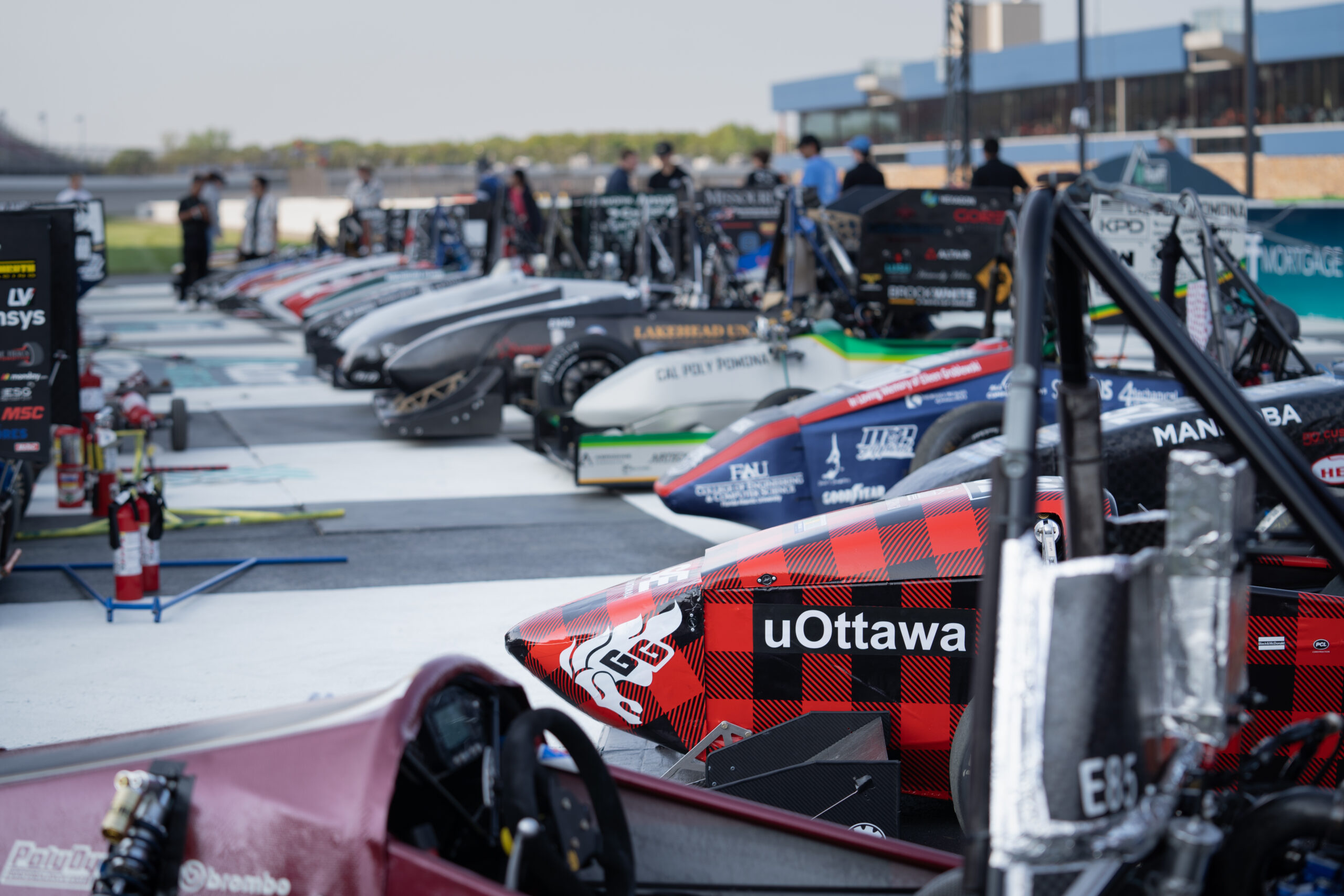
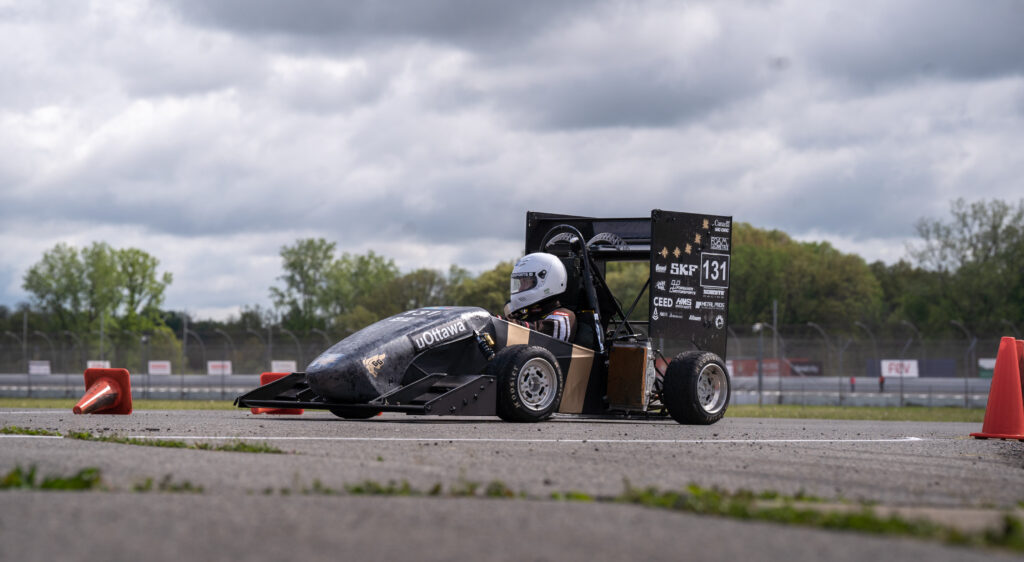
In the heart of the University of Ottawa, a group of students takes on an exciting journey each year ─ crafting, engineering, and racing a Formula-Style car. Formula uOttawa is the university’s Formula SAE (Society of Automotive Engineers) team.
Formula SAE an international student engineering competition organized by the Society of Automotive Engineers (SAE). University teams from around the world design, build, and race small, Formula-Style race cars, competing in various dynamic and static events. These competitions test the cars’ performance in areas like acceleration, endurance, and handling while also evaluating engineering design, business presentations, and cost analysis.
Formula uOttawa is a blend of 70 to 100 students with 20 core members who do the bulk of the work. The teams are divided into teams and sub-teams that focus on one particular part of the manufacturing.
“We have a core team that this team leads, and we are mainly divided into sub-teams,” said Jacob D’Aoust the team manager and one of the two drivers. “One team is working on the electrical, one team is working on the aerodynamics, etcetera.”
D’Aoust said that they have around a dozen new people each year who help with everything, along with several others who come and go, follow the team, attend their events, and show their support.
Unlike some other Formula SAE teams, Formula uOttawa is not a part of the curriculum of the engineering program, they are an extracurricular club. Students commit their evenings, weekends, and any spare moment outside their rigorous coursework to refining their machine.
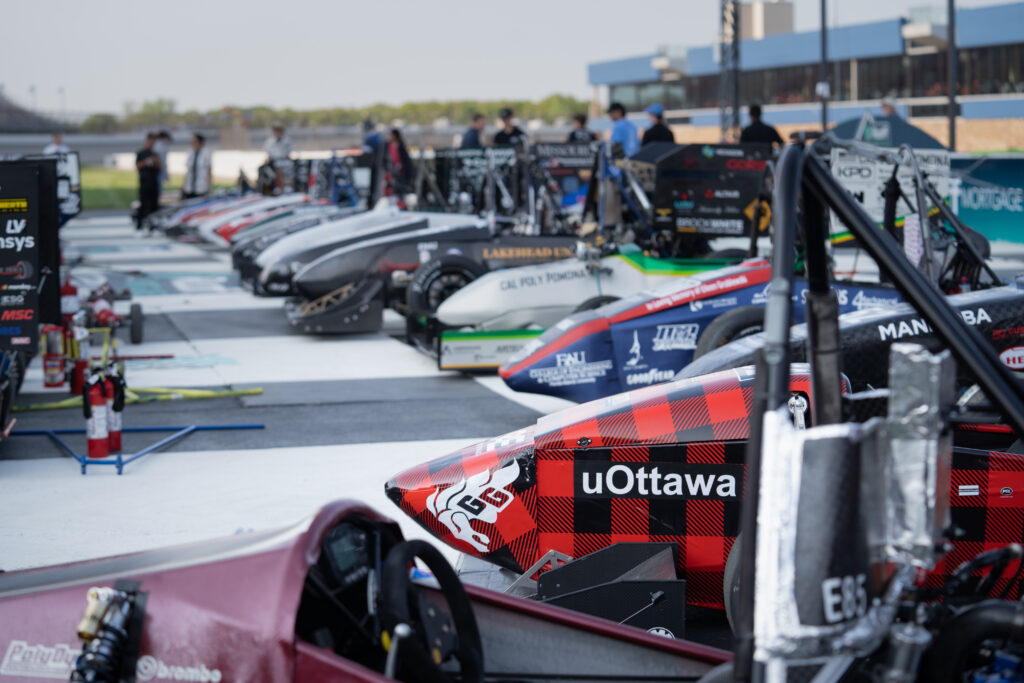
This is the cause of one of the challenges they all face ─ time.
“Being student-run, I guess the main thing is kind of balancing the schedule, to not only get all work done but also make sure that we can give out to the rest of the team as much engagement as we can,” said D’Aoust.
To some members, this also feels like an extra class on top of their big course loads.
“I would say, there’s a lot of learning that goes into this too on top of classes,” said Kobe Belanger, technical director and second driver. “They don’t teach you everything in classes even though what we are doing is technically engineering. So there’s a lot of times, it’s pretty much like, having an extra class on top of that just research and learning.”
Each season unfolds as a meticulously orchestrated process. The team sets its sights on completing the car by March or early April, ensuring a robust testing period before the high-stakes competition in May.
“Our goal is to have it done, by the end of March or early April at the latest,” said D’Aoust. “That’s when the date that we set for ourselves. That’s an earlier date than in previous years because we’re aiming to have a longer testing session.”
With the snow and the weather, they only get a decently tight window in which they can take the car outside and drive it and test it. So, they want to maximize that.
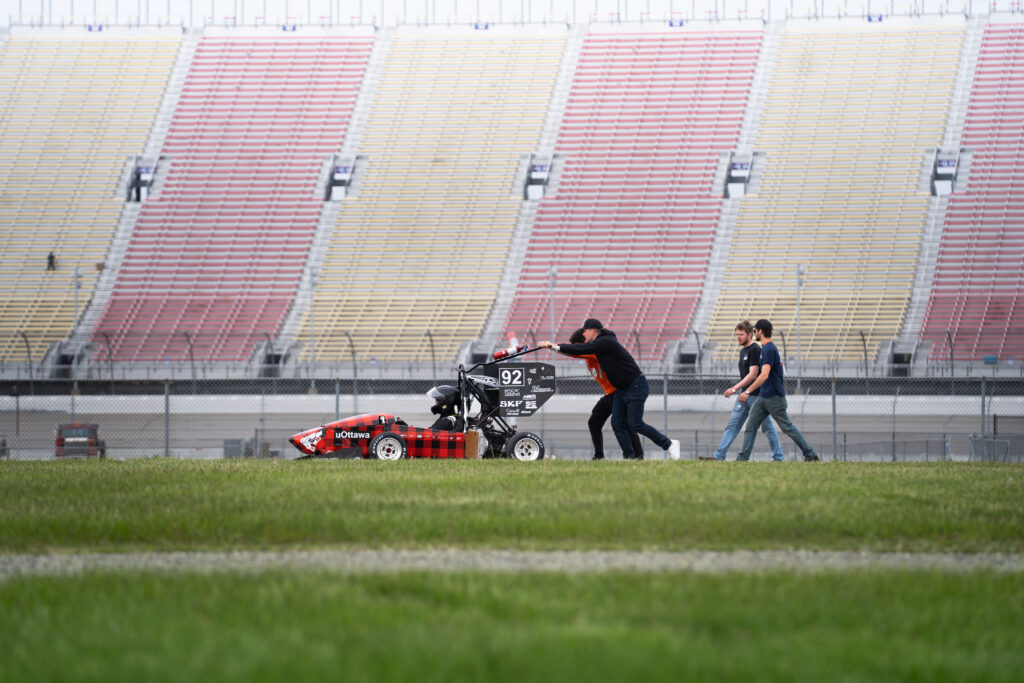
The car is smaller, being of the size somewhere between a go-kart and an actual Formula car. The team aims to design and build as much of it as they can themselves.
“In previous years, we’ve made some design decisions that now we’re kind of going back on to improve or to change a little bit,” said Belanger. “So this year or last year, I should say, was a very big design year with almost every system of the car completely changing. And this year, it’s getting scaled back to just taking those big changes we made and getting as much performance as we can out of them and making it a super reliable car.”
The team operates on a whole year cycle, but not all of that is designing and making it.
“Usually, the season will start either right after competition or later in the fall where we test the previous car to, get more information about where we can improve,” said Belanger. “Then we really start on the research in the summer on, just what we wanna choose to implement that year and what is feasible. Then when it comes fall, that’s when we start to actually turn our ideas into concrete designs.”
It’s usually around right after winter in the new year when the final building and manufacturing of the car starts.
Formula uOttawa competes at the Michigan Formula SAE event, the pinnacle of student motorsports in North and South America. Beyond this, they participate in unsanctioned yet competitive races, such as the Pittsburgh Shootout and the Toronto Shootout.
Despite the spirit of rivalry, a deep camaraderie binds them with fellow competitors—especially with Carleton University’s FSAE team.
“We’re like sister teams,” said D’Aoust. “We share tools, ideas, and sometimes even test together.”
As a student-run initiative, the team faces a unique challenge—constant renewal. With each graduating class, knowledge must be carefully passed down to ensure the team’s continued success.
“The competition is for students, specifically for undergraduate students,” said D’Aoust. “Still some alumni stay active with the team by staying on as advisors, and helping us with, design review or, giving us help in manufacturing and all that”
“But most people, their involvement, like, mostly stops when you graduate, there’s a whole passing on the torch to the newer students. That’s also one of the big challenges that being a student-run team is that at one point, you’re going to graduate. So the people that have all the knowledge now will be gone in a maximum of four years. So there’s a lot of importance put on the knowledge transfer.”
Funding remains another crucial aspect. While the Faculty of Engineering provides substantial support, external sponsorships are vital. The team actively seeks partnerships, hosting fundraisers and watch parties to secure the resources needed to build a top-tier car.
“I would say a majority of our funding does come from the school through the faculty of engineering,” said Belanger. “But the sponsorship part is a whole other side of the team that is very important.”
Beyond the thrill of racing, Formula uOttawa is a gateway to unparalleled career opportunities. Alumni have secured prestigious roles with industry giants, including Mercedes F1, Tesla, and Chrysler, a testament to the team’s real-world impact.
“Engineering can often feel theoretical, but being on this team gives you hands-on experience,” Belanger said. “That’s something that a lot of employers really value is that experience.”
Unlike some structured FSAE teams with rigid entry processes, Formula uOttawa embraces an open-door philosophy, welcoming anyone eager to learn and contribute.
“We encourage a very proactive approach to new members to, come to the shop, and ask us a bunch of questions. These are basically the main two things that we say,” said D’Aoust.
“And just by doing those two things, most people that are really interested end up, really getting it instantly wrapped around, or wrapped into the team, and its activities, and then we end up keeping members, for a long time.”
As they gear up for another season, the team remains driven by a singular vision—continuous evolution, innovation, and an unrelenting pursuit of excellence. For these students, Formula uOttawa isn’t just about building a car—it’s about crafting a legacy, one revolution at a time.