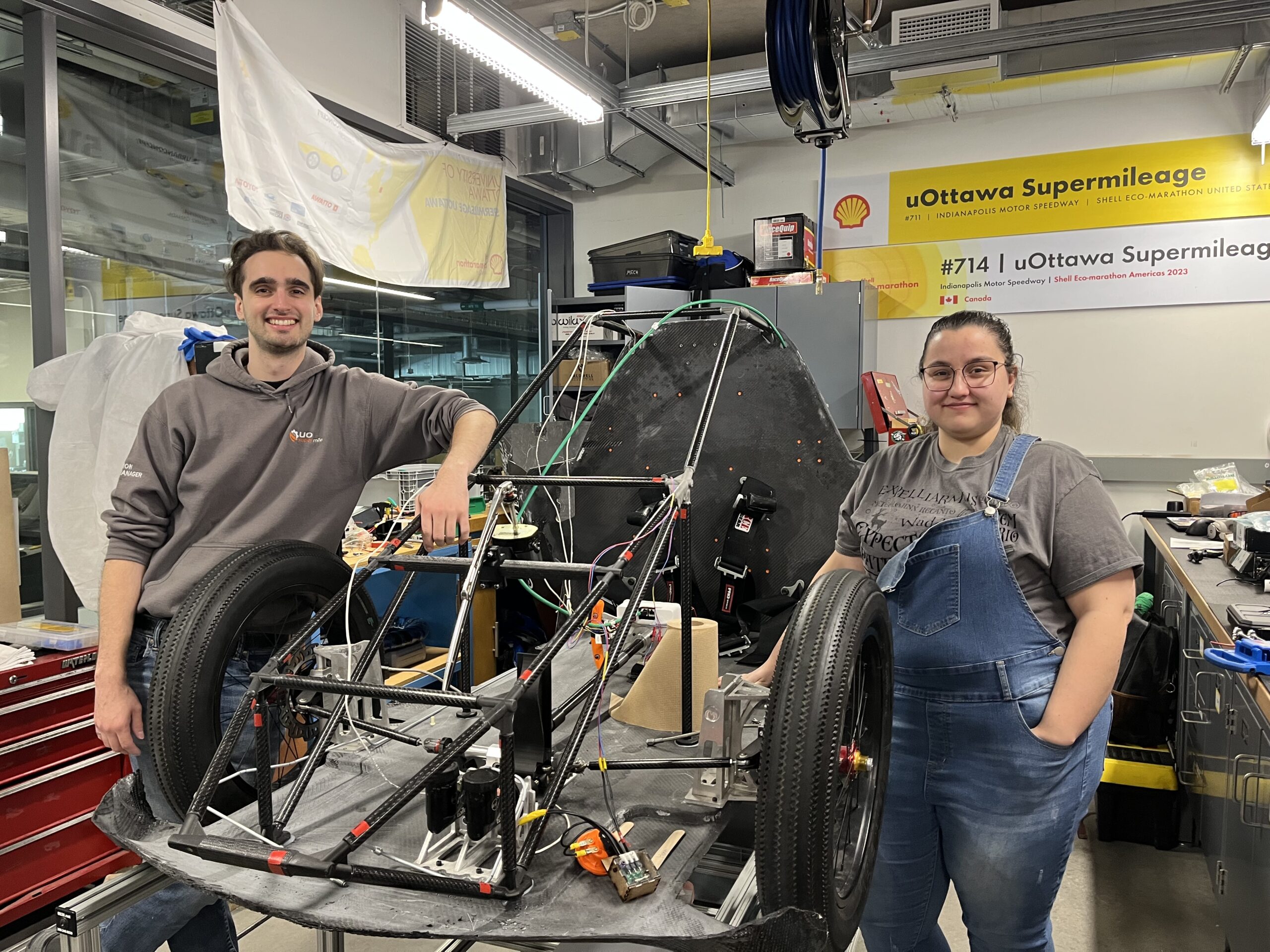
In a STEM complex workshop, University of Ottawa students are rewriting the rules of racing. Not through horsepower, but through hyper-efficiency.
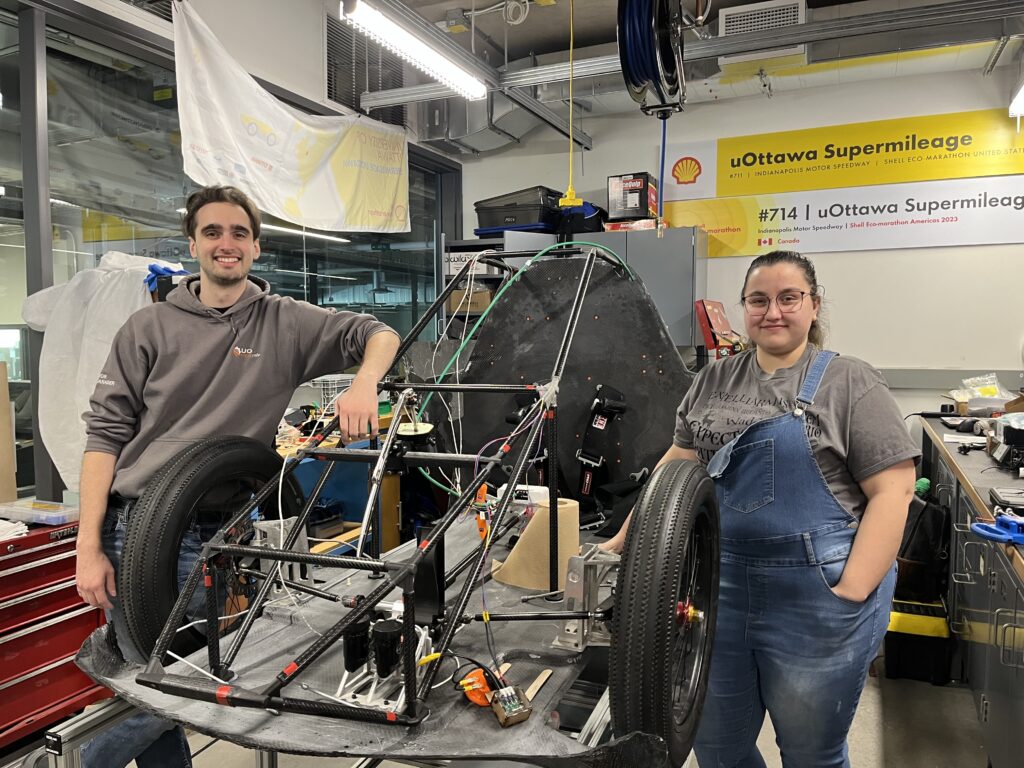
The UO Supermileage Team, the university’s only electric racing group, is pushing the boundaries of automotive efficiency while competing on an international level.
“You can join no matter what program you’re in,” said Brandon Sommers, the team’s mechanical lead and a master’s student in mechanical engineering. “Most students who join are in engineering because, if you’re in health sciences, you probably don’t think you can join.”
The team, which includes over 100 members, collaborates across disciplines to build a single-seat electric vehicle. Their goal? To travel as far as possible on a fixed amount of energy determined by their performance in the Mileage Challenge.
Simon Tremblay, another master’s student in mechanical engineering, explains the team’s recent shift in focus. “We were combustion up until 2018, and then we just decided to merge into an urban concept electric team.”
This transition presented new challenges.
“It’s been an adventure of learning about electronics and debugging all sorts of things,” said Tremblay. “We had never actually propelled this heavy of a vehicle with an electric system.
The team operates on a yearly cycle, mirroring the academic calendar. Fall is dedicated to recruitment and design, while winter sees more manufacturing.
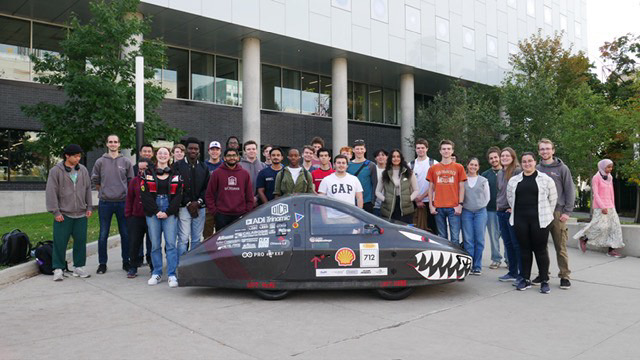
“Starting in January is when usually manufacturing goes crazy,” said Sommers. “Some of the parts we do buy, but we try to make as much as we can because it’s a lot cheaper that way. And it’s fun to make the parts yourself.”
The team’s annual budget comes from various sources, with the majority provided by the university’s Engineering Endowment Fund.
“That’s 60 percent of our budget,” Tremblay said. “Another 20 percent is the John McIntyre Team Fund. And then the last 20 percent we fundraise ourselves.”
Marie Frédérique Fortin, a biomedical mechanical engineering student, highlights the importance of the university’s facilities.
“The room we use a lot is the Makerspace,” she said. “We have a 3D scanner, 3D printer, we have a laser cutter and a lot of different stuff.”
These resources allow team members to gain hands-on experience with cutting-edge technology, bringing together classroom theory and real-world experience.
“When I did my first co-op, I only knew stuff that I had learned in class, and I was completely useless,” said Tremblay. Joining a team like UO Supermileage teaches students “a lot of machining skills. Anything that isn’t theoretical,” he said.
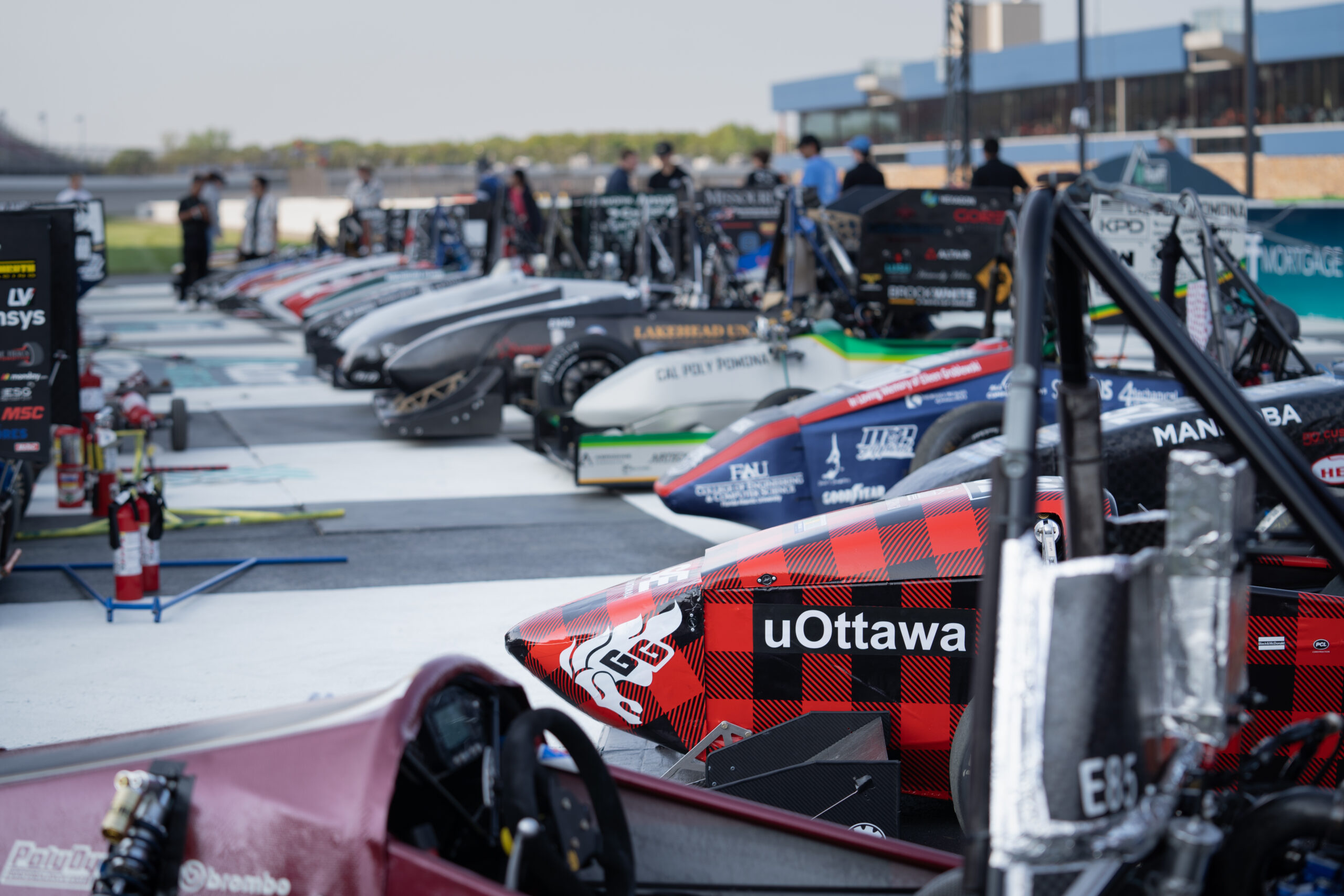
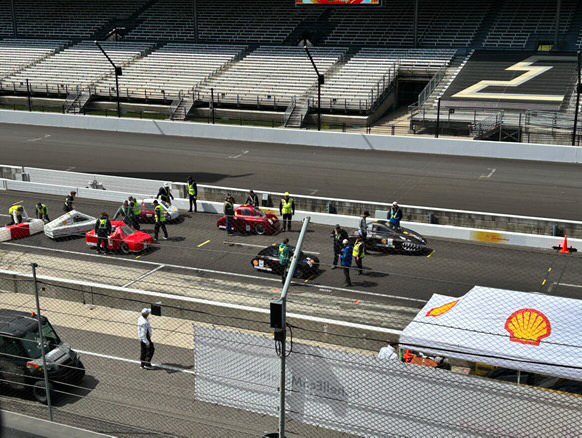
The team’s efforts come together each spring at the Shell Eco-Marathon Americans competition, which has been held at the Indianapolis Motor Speedway for the past three years.
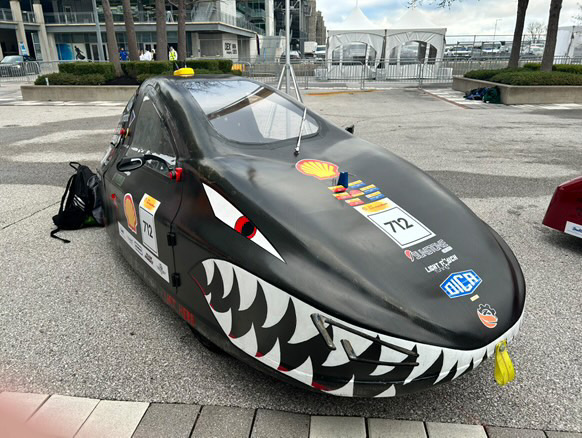
“There are universities and high schools from the whole continent,” Tremblay said. “It’s pretty neat. There are people from Brazil, there’s people from all over the US.”
As the UO Supermileage Team looks to the future, they’re considering a return to their roots.
“A lot of people are interested in doing a prototype vehicle next year,” Tremblay said.
While their silent, streamlined vehicle may never challenge traditional street racing, the UO Supermileage team represents a different kind of automotive passion. One where victory is measured in kilometres per kilowatt-hour and every gram of weight saved is an achievement.